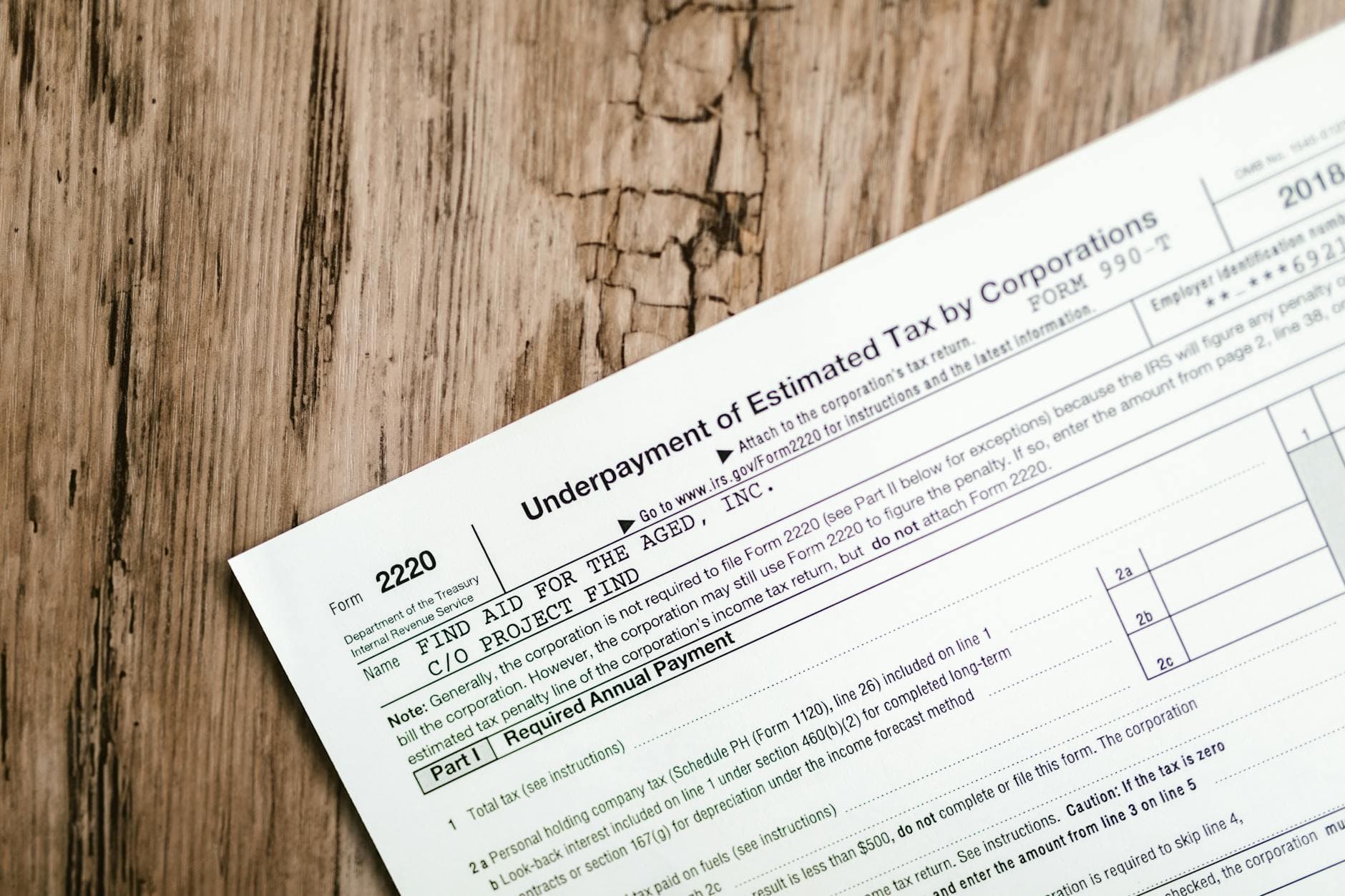
If you are a UK agency founder with operations in the UAE, or you are considering setting up there, the tax environment changed significantly in 2023. The UAE introduced a federal corporate tax of 9% on business profits, effective for financial years starting on or after 1 June 2023.
This is not a small tweak. It is the first time the UAE has introduced a broad-based corporate tax. For UK agency founders who moved to Dubai to take advantage of the zero-tax environment, or who run a branch of their UK agency from a free zone, the rules around UAE corporate tax UK agency interactions now matter a great deal.
In this article, I will explain how the UAE corporate tax works, who it applies to, and how it interacts with your UK tax obligations. I will use real numbers and agency scenarios. Working exclusively with agency founders, we work with agency founders operating in both jurisdictions, so this is grounded in what we see day to day.
What Is the UAE Corporate Tax Rate?
The standard UAE corporate tax rate is 9% on taxable profits above AED 375,000 (approximately £79,000 at current exchange rates). Profits below that threshold are taxed at 0%.
There is a separate headline rate of 0% for qualifying income from qualifying activities in a free zone. But that comes with conditions, which we will get to.
For a UK agency founder running a UAE entity, the effective rate you pay depends on three things:
- Whether your UAE entity is in a free zone or on the mainland
- Whether your income qualifies for the 0% free zone regime
- Whether your profits exceed the AED 375,000 threshold
Does UAE Corporate Tax Apply to Free Zone Companies?
Yes, it does. But the application is different.
Free zone entities can still qualify for a 0% corporate tax rate on their qualifying income. This is income from activities defined by the UAE Ministry of Finance as qualifying activities. For agency founders, the relevant qualifying activities typically include:
- Provision of services to non-UAE residents
- Distribution of goods to non-UAE residents
- Holding and management of intellectual property (subject to substance requirements)
If your free zone agency provides services to clients based outside the UAE, and you have sufficient substance in the free zone (office, staff, bank account), your income likely qualifies for the 0% rate.
But if you provide services to UAE mainland clients, that income is not qualifying income. It gets taxed at the standard 9% rate (or 0% on the first AED 375,000).
This is where the complexity hits. Many agency founders in free zones serve a mix of UAE and international clients. You need to track which income is qualifying and which is not.
What About Mainland UAE Companies?
If your UAE entity is a mainland company (not in a free zone), the standard corporate tax rules apply in full. You pay 0% on the first AED 375,000 of profit, and 9% on anything above that.
There is no distinction between types of income. All trading profits are treated the same.
For a mainland agency billing AED 1.5 million per year (roughly £315,000) with costs of AED 900,000, your taxable profit would be AED 600,000. You would pay 0% on the first AED 375,000 and 9% on the remaining AED 225,000. That is a tax bill of AED 20,250, or about £4,250.
Compare that to the UK, where the same profit would attract corporation tax at 19% to 25%, and the difference is still substantial. But it is not zero anymore.
How Does UAE Corporate Tax Interact With UK Tax?
This is the critical question for UK agency founders. The interaction between UAE corporate tax UK agency structures is governed by the UK-UAE Double Taxation Treaty.
Under the treaty, business profits are generally taxable in the country where the business is resident. If your UAE entity is genuinely managed and controlled in the UAE, and you have a permanent establishment there, those profits are taxable in the UAE first.
But here is the catch. If you are UK tax resident (which you usually are if you spend more than 183 days in the UK in a tax year, or if your main home is in the UK), the UK will also want to tax your worldwide income. That includes profits from your UAE entity.
The treaty prevents double taxation. You claim foreign tax credit relief in the UK for the UAE corporate tax you paid. So if your UAE entity pays 9% on profits above AED 375,000, you claim that 9% as a credit against your UK corporation tax liability on the same profits.
But if your UAE entity pays 0% because it qualifies as a free zone company, there is no UAE tax to credit. The UK will then tax those profits at the full UK rate (19% to 25%).
This is where the planning gets interesting. You cannot simply set up a free zone company, pay 0% tax in the UAE, and assume the UK will ignore it. If you are UK tax resident, the UK will tax those profits. The treaty just means you do not pay twice.
Do I Need to Register for UAE Corporate Tax?
Yes, if your UAE entity meets the threshold. All UAE businesses, including free zone companies, must register for corporate tax with the Federal Tax Authority (FTA).
The registration deadline depends on when your financial year started. For most existing businesses, registration was required by certain dates in 2024. If you set up a new entity after 1 June 2023, you must register within a specific period after incorporation.
If you have not registered yet, do it now. Late registration carries penalties.
You will also need to file an annual corporate tax return. The return is due within 9 months of the end of your financial year. So if your UAE entity has a December year end, the return is due by 30 September.
Record keeping requirements are similar to the UK. You need to maintain proper accounting records, prepare financial statements (audited if turnover exceeds AED 50 million, about £10.5 million), and keep records for at least 7 years.
What About Personal Tax? Are You Still Tax-Free in the UAE?
Yes. The UAE does not impose personal income tax on individuals. That has not changed with the introduction of corporate tax.
If you are a UK agency founder living in the UAE and not UK tax resident, your personal income (salary, dividends from the UAE entity) is not taxed in the UAE. And if you are genuinely non-UK resident (spending fewer than 16 days in the UK per tax year, or fewer than 46 days if you were UK resident in any of the previous 3 years), it is not taxed in the UK either.
But if you remain UK tax resident while running a UAE entity, your personal income is taxable in the UK. Your UAE salary and dividends are subject to UK income tax and National Insurance, subject to any relief under the treaty.
This is a common mistake. I have seen agency founders move to Dubai, set up a free zone company, pay no personal tax in the UAE, and assume they are free of UK tax. But if they still spend significant time in the UK, or their family is here, they remain UK tax resident. The UAE entity's profits are then taxable in the UK, and their personal drawings are taxable too.
The split tax year rules and statutory residence test are complex. If you are considering a move, or you have already moved, get specific advice on your residency status before assuming anything.
Do I Need a UAE Bank Account and Substance?
Yes. To qualify for the 0% free zone corporate tax rate, you need genuine economic substance in the UAE. The FTA will look at whether you have:
- A physical office (not just a flexi-desk or virtual address)
- Employees in the UAE who carry out the core income-generating activities
- A UAE bank account through which revenue flows
- Management and control exercised from the UAE
If your UAE entity is essentially a shell that funnels profits from UK clients, with no real activity in the UAE, you will not qualify for the 0% rate. You will be taxed at 9% on profits above AED 375,000. And you may face challenges from HMRC if they consider the entity a sham or a tax avoidance arrangement.
For a genuine agency founder who has relocated to Dubai, has a team there, and serves clients from that base, the substance requirements are usually straightforward to meet. But for someone who just registered a free zone company while living in Shoreditch and working from WeWork, it is a different story.
What About VAT?
The UAE has had VAT at 5% since 2018. That has not changed. If your UAE entity supplies services to UAE-based clients, you may need to register for UAE VAT if your taxable supplies exceed AED 375,000 per year. The threshold is AED 187,500 for voluntary registration.
UAE VAT is a separate compliance burden. You need to file returns quarterly or monthly, depending on your turnover. The rules are similar to UK VAT but with some differences in rates and exemptions.
If you are a UK agency founder with a UAE entity, you may end up dealing with two VAT regimes. That is manageable, but it adds complexity to your bookkeeping and reporting.
How Should Agency Founders Structure Their UAE Operations?
There are three common structures for UK agency founders with UAE operations:
Structure 1: UK company with a UAE branch. Your UK agency opens a branch office in a UAE free zone. The branch is not a separate legal entity. Profits are attributed between the UK and UAE based on functions, assets, and risks. The UAE branch pays UAE corporate tax on its attributed profits. The UK company pays UK corporation tax on worldwide profits, with credit for UAE tax paid.
Structure 2: Separate UAE company. You incorporate a standalone UAE free zone or mainland company. It has its own clients, bank account, and staff. It is a separate legal entity. You own the shares personally or through a holding company. The UAE company pays UAE corporate tax. Dividends paid to you as a UK resident shareholder are subject to UK dividend tax.
Structure 3: UAE company as a subsidiary of the UK company. Your UK agency owns 100% of the shares in the UAE company. The UAE company pays UAE corporate tax. Dividends paid to the UK parent may be exempt from UK corporation tax under the substantial shareholding exemption, depending on the conditions.
Each structure has different tax implications, compliance burdens, and exit planning considerations. There is no one-size-fits-all answer. The right structure depends on your residency, your clients, your team, and your long-term plans.
What About Transfer Pricing?
Yes, transfer pricing applies in the UAE. If your UK agency charges management fees, royalties, or service fees to your UAE entity, or vice versa, the transactions must be at arm's length.
The UAE has introduced transfer pricing documentation requirements. If your group turnover exceeds AED 200 million (about £42 million), you need to prepare a master file and local file. For smaller groups, you still need to maintain documentation to support your transfer pricing policies.
For most agency founders, the main transfer pricing risk is around profit allocation. If your UAE entity earns high margins while your UK entity earns low margins, and the UK entity provides the client relationships, brand, and senior management, HMRC may challenge the profit split. The same applies in reverse if the UAE entity is the one doing the work.
Document your transfer pricing policy. Have a written agreement for any intercompany charges. And ensure the charges reflect the economic reality of what each entity does.
Practical Steps for UK Agency Founders With UAE Operations
If you already have a UAE entity, or you are considering setting one up, here is what you need to do:
- Check your UK tax residency status. If you spend more than 183 days in the UK, or your family is here, you are likely UK resident. That changes everything.
- Register your UAE entity for corporate tax. If you have not done this yet, contact the FTA or your UAE accountant immediately.
- Review your free zone status. If you are in a free zone, check whether your income qualifies for the 0% rate. If you serve UAE mainland clients, you may need to restructure.
- Prepare financial statements. You need proper accounts to file your UAE corporate tax return. If you have been using Xero or QuickBooks for your UAE entity, make sure the records are complete.
- Review your substance. Do you have a real office, real staff, and real activity in the UAE? If not, you may not qualify for the 0% rate, and HMRC may take an interest.
- Document your transfer pricing. If your UK and UAE entities transact with each other, put the agreements in writing and set the prices at arm's length.
- Speak to your accountant. If your current accountant does not understand both UK and UAE tax, find one who does. We work with agency founders in both jurisdictions, so get in touch if you need help.
Common Mistakes I See
I will leave you with the three most common mistakes I see UK agency founders make with UAE structures:
Mistake 1: Assuming zero tax in the UAE means zero tax overall. If you are UK resident, the UK will tax your worldwide income. The UAE corporate tax rate of 0% or 9% is not a magic shield. You need to plan for UK tax too.
Mistake 2: Not registering for UAE corporate tax. Some founders think their free zone company is exempt. It is not. All businesses must register. The penalties for late registration are real.
Mistake 3: Ignoring substance requirements. A free zone company with no office, no staff, and no bank account in the UAE will not qualify for the 0% rate. And HMRC may see it as a tax avoidance structure. Do it properly or do not do it at all.
The UAE corporate tax regime is still relatively new. The FTA is still issuing guidance and clarifying rules. If you are operating in both jurisdictions, stay informed and get advice tailored to your situation. As specialist agency accountants working specifically with agency founders, we can help you navigate this. Our services page covers how we support international agency structures.
Related articles in International Agencies